
• Miami06:40
  • ·Athens13:40
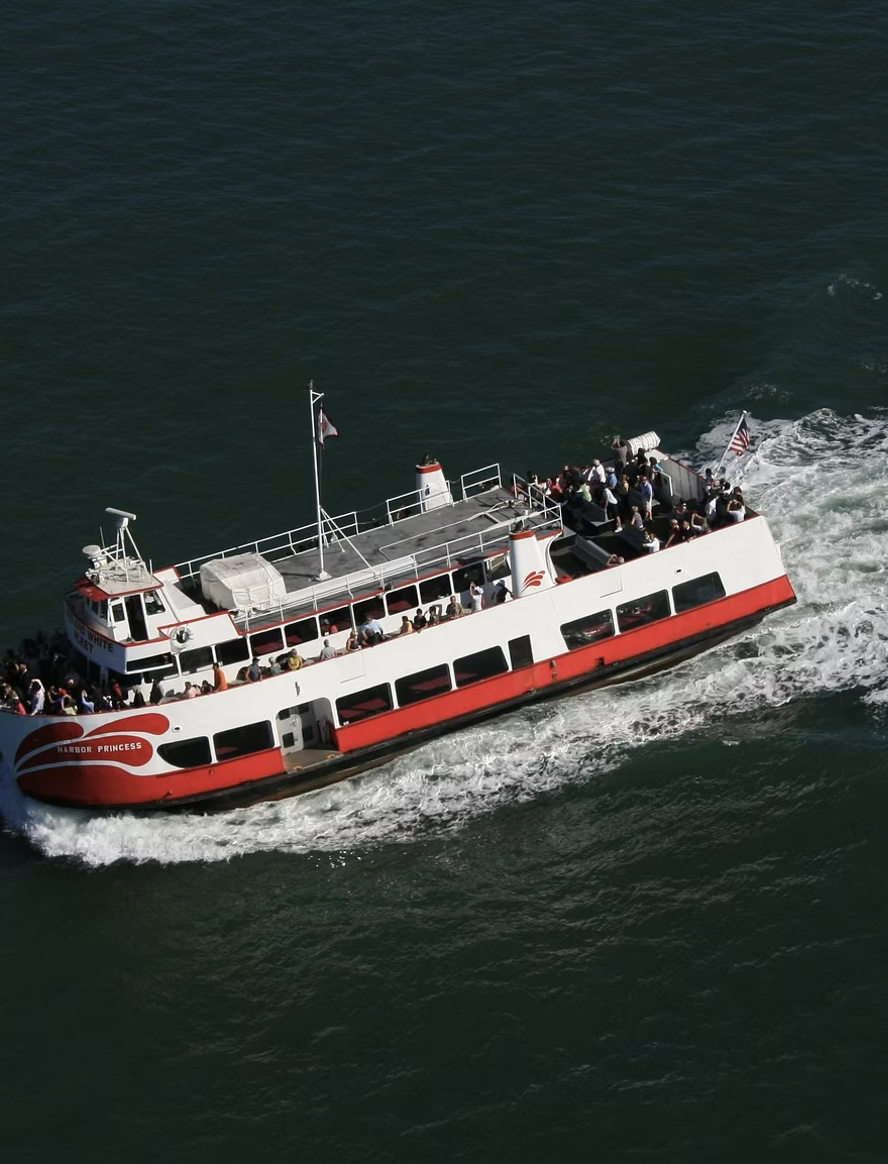
Passenger ferry underway at dusk
SRMG

Passenger & Vehicle Ferries

Cover for the schedule, the passengers, and everything in between.

Ferry operators sit at the intersection of every marine risk profile at once — passenger liability, vehicle deck exposure, port state compliance, tight schedules, and a mass-casualty scenario that never leaves the risk register. Standard commercial marine cover was not written for the operational reality of ferry services. We build programmes that address every layer — hull, P&I, passenger claims, USCG Subchapter K/T compliance, and the war and cyber exclusions that increasingly matter on international routes.

0+
Passenger claims handled in a single incident
<0 hrs
Peak-season claims response
0 yrs
Marine-specialist experience

Ferry insurance combines hull & machinery cover for the vessel, protection & indemnity (P&I) for passenger and third-party liability, and specialised extensions for vehicle deck exposure, mass casualty scenarios, and route-specific regulatory compliance. In the US, most passenger ferries operate under USCG Subchapter T (small passenger vessels carrying 150 or fewer passengers) or Subchapter K (more than 150 passengers), each with distinct coverage requirements.

THE EXPOSURE

Every sailing carries the whole risk register.

01

Mass Casualty Scenarios

A single ferry incident can produce more passenger claims in one afternoon than a commercial fleet sees in a year. Programme structure has to account for the aggregation risk that standard hull and P&I cover was never built to hold.

Recent claim: Bow-door failure on a Ro-Pax route — 340 passenger claims, mass-notification protocol activated. P&I aggregate limit stress-tested; no cover shortfall.

02

Vehicle Deck Fire Risk

Modern ferries carry hundreds of vehicles — including electric vehicles with lithium batteries that current suppression systems weren't designed for. Underwriters are tightening terms fast; the programmes we place stay ahead of the wording changes.

Recent claim: EV thermal runaway in a vehicle deck, contained by crew before spread. Hull damage limited; wording review triggered mid-term restructuring across the fleet.

03

Regulatory & Port State Compliance

USCG Subchapter K/T, IMO SOLAS, MCA Passenger Ship Code, EU flag state requirements — every route touches a different regulatory frame. Cover has to satisfy each one, or the operating licence is at stake.

Case: EU-flagged Ro-Pax refused port entry pending updated P&I certificate. New endorsement issued within 4 hours; sailing schedule held.

04

Schedule Interruption

Ferries make money on the timetable. Any covered event — mechanical, weather, dispute — that idles a route eats into the season's revenue immediately. BI cover has to reflect the actual timetable, not an annualised average.

Recent claim: Main engine failure during peak Aegean season — 11-day repair window. BI cover paid daily revenue at peak-season rate, not annualised.

THE PROGRAMME

Four layers, built around the timetable.

01

Hull & Machinery

Physical loss or damage on an agreed-value basis, including the engineering-critical systems that ferries depend on — main engines, thrusters, ramps, bow doors, watertight closures.

02

Protection & Indemnity (P&I)

Full passenger and third-party liability through the International Group P&I Clubs, with aggregation cover sized for mass-casualty scenarios and route-specific exposures.

03

Passenger Liability Extensions

Athens Convention limits, PLR (Passenger Liability Regulation) compliance for EU routes, USCG Subchapter K/T mandatory coverages. Structured to satisfy every regulator on your operating certificate.

04

Business Interruption

Loss of income cover indexed to your actual timetable and route revenue — reflecting seasonal peaks, not annualised averages.

THE DIFFERENCE

Standard marine cover versus a ferry programme.

Standard commercial marine programme

  • Passenger aggregation not stress-tested
  • Vehicle deck fire cover under review
  • Subchapter K/T compliance not certified
  • BI written against generic downtime

SRMG ferry programme

  • P&I aggregation sized for mass-casualty
  • Vehicle deck cover including EV thermal risk
  • USCG Subchapter K/T mandatory coverages
  • BI matched to route timetable and season
CASE STUDY
Passenger ferry underway at dusk

A Ro-Pax fleet restructured before the season — not after the incident.

A Mediterranean ferry operator running four Ro-Pax vessels on peak-season routes came to us mid-year with a programme that hadn't been re-broked in three years. Our review identified aggregation exposure on passenger liability that would have breached limits in a single mass-casualty scenario, and vehicle deck cover written before EV traffic became material. We restructured the entire programme across all four hulls inside five weeks — before season peak. Six months later a bow-door incident produced 340 passenger claims. The restructured aggregate held. Zero uncovered exposure.

  • Programme restructured across four Ro-Pax hulls in five weeks
  • Passenger aggregate raised to reflect actual peak-season loading
  • Vehicle deck cover extended to include lithium battery thermal risk
  • BI indexed against actual timetable, not annualised revenue
MEDITERRANEAN RO-PAX OPERATOR · 4-VESSEL FLEET · 2024–PRESENT
The old programme was a snapshot from three years ago. SRMG's audit was the first time anyone had actually looked at the aggregation risk on our peak-season loading. When the incident happened, we had the cover we needed — not the cover we'd assumed we had.
OPERATIONS DIRECTOR · MEDITERRANEAN FERRY GROUP · 🇬🇷
WHY SRMG

Why ferry operators place with us.

  • Direct access to Lloyd's marine underwriters and International Group P&I Clubs
  • Passenger liability aggregation stress-tested against actual timetable and route data
  • USCG Subchapter K/T, SOLAS, and MCA Passenger Ship Code compliance built into every placement
  • 24/7 claims mobilisation including mass-casualty response protocols
  • Independent since 1990. Every renewal, we go back to market. Every time.

The timetable doesn't wait. Neither should your programme.

Complimentary ferry programme review — passenger aggregation stress-test, vehicle deck cover audit, regulatory compliance check. No obligation.

FERRY INSURANCE FAQ

Questions ferry operators ask.

Passenger ferries typically require hull & machinery cover for the vessel, protection & indemnity (P&I) for passenger and third-party liability, and specialised extensions for vehicle deck exposure and mass-casualty aggregation. US-flagged ferries operating under USCG Subchapter K or T must also carry statutory minimum liability coverage; EU-flagged ferries must comply with the Passenger Liability Regulation (PLR) and Athens Convention limits.

Last reviewed: August 2026