
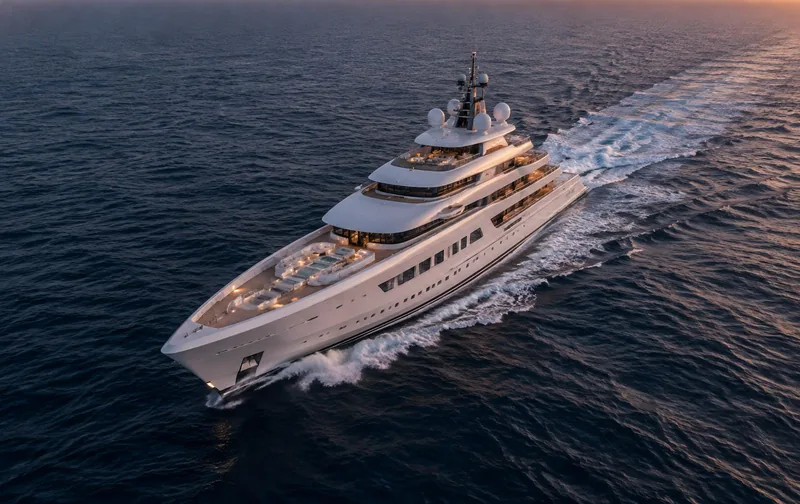
The Superyacht Insurance Guide: Coverage, Cost Drivers and How Placement Works (2026)
SRMG Advisory Team · Updated 27 October 2026
SRMG's 2026 guide to superyacht insurance: what it covers, what shapes the price, how Agreed Value works, and how placement is done through Lloyd's and specialist yacht markets.
What does superyacht insurance actually cover?
A superyacht programme is built from several parts.
Hull and Machinery covers physical loss of or damage to the yacht herself. Most yacht policies are written on an Agreed Value basis, meaning the insured value is fixed when cover starts rather than argued over after a loss.
Protection and Indemnity (P&I) covers the owner's liability to others. On a yacht that typically means injury to crew, guests and charter guests, damage to other boats, pontoons and marinas, wreck removal and fuel pollution, depending on the wording. Yacht P&I is not the same as the P&I a cargo ship buys from a shipowners' club, and every yacht wording is different.
Crew cover deals with crew medical expenses, repatriation and the owner's responsibilities as employer.
Around these sit optional covers, chosen to fit the yacht: Tenders and Toys, onboard contents, art and valuables, Charterers' Liability for charter yachts, and Cyber cover for connected yachts.
What shapes the cost of superyacht insurance?
There is no rate card. Every superyacht is quoted on her own merits. Premiums are influenced by the yacht's value, age and build quality, crew experience, claims history, Cruising Area, and whether she is used privately or for charter. Insurers also look at maintenance standards and survey reports. The sum insured has a direct bearing on the premium, and most insurers want claims records from at least the last five years.
In our experience, three more things weigh heavily on a superyacht premium:
- Where she is based. Location sets her exposure to catastrophe. A yacht kept in Miami through hurricane season is a very different risk from one wintering in the Mediterranean.
- Who owns her. Underwriters look at the Ultimate Beneficial Owner (UBO) behind the owning company.
- Her flag.
Owners can influence more than they expect: a Cruising Area that matches the real plan, a declared lay-up period, a well-documented maintenance and survey record, and an experienced, well-qualified crew all help an underwriter say yes.
Agreed Value vs Market Value: why it matters
On an Agreed Value policy, the insurer and the owner fix the yacht's insured value when cover starts, and a total loss pays that figure. On a Market Value policy, more common for smaller production boats, the payout is the value assessed at the time of loss, which can lead to a dispute at the worst possible moment. For a superyacht, Agreed Value is the basis to ask for, and the valuation should be kept current, especially after a refit.
Does chartering change the insurance?
Yes. A yacht that charters is operating commercially while she is under charter. The liability picture changes, crew employment terms can change, and the policy needs to know. Charter yachts usually need Charterers' Liability considerations, liability limits that fit the number of guests, and wording that is clear about the switch between private and charter use. In our experience, yachts that mix owner use with occasional charter are where gaps most often appear, so the wording deserves a careful read.
Where can she go? Cruising Area and Navigation Limits
Every yacht policy says where and when the yacht may operate. Cruising outside the agreed limits without the insurer's approval can invalidate cover entirely. If next season includes a new region, an Atlantic crossing or a winter somewhere new, tell the insurer before she goes, not after. Told early, it is usually a short email and a line on the schedule.
What about Cyber cover?
Modern superyachts are connected: navigation systems, onboard networks, guest Wi-Fi and the owner's own devices. Many marine policies exclude cyber events. Where that matters, a Cyber extension or a dedicated Cyber policy can close the gap. We review this case by case.
Other covers worth discussing
War Risks are excluded from standard marine policies. For owners planning to cruise in regions where that matters, War Risks cover can be added, and it should be arranged before the voyage. For remote cruising, some owners also ask about Kidnap and Ransom cover. Both are specialist covers, and we only recommend them where the itinerary calls for them.
How placement actually works
Superyacht insurance is not bought from a website. It is placed. A specialist broker prepares the submission (the yacht's particulars, survey, crew list, Cruising Area, claims record, ownership and flag), takes it to underwriters at Lloyd's and specialist yacht insurers, negotiates the terms and the wording, and arranges cover.
Placement quality shows in the wording: Navigation Limits that match the real cruising plan, lay-up terms that reflect where she really spends the winter, and crew provisions that fit how the crew is employed. In our experience, a complete file sent two to three months before the start or renewal date gets the best conversation with the market.
How to choose a broker
Ask five questions:
- Which markets can you access: Lloyd's and specialist yacht insurers, or only retail markets?
- Who handles claims, and can I reach them at 3 a.m. in another time zone?
- What is your experience with yachts of this size, flag and use?
- Will you show me the full policy wording, not just a summary of benefits?
- Do you represent me, or the insurer?
A broker who builds the programme around the yacht, rather than selling a product, will have specific answers.
Frequently asked
Related articles


MARKET NOTES
The water changes. We'll keep you current.
A short note when the market moves — rate shifts, wording changes, regulatory deadlines. A few times a year. No spam, unsubscribe anytime.